
September 18, 2026
New EU Packaging Rules: Rethink Plastic in Your PPE Aisle

New EU Packaging Rules: Rethink Plastic in Your PPE Aisle
Packaging across European retail is undergoing a clear transformation. Under the EU’s Packaging and Packaging Waste Regulation (PPWR), category managers face growing expectations around waste reduction, improved recyclability, and material efficiency in the years ahead. For PPE retailers, packaging is no longer just a protective shell—it is a critical element of long-term category strategy.
Moving Away from Traditional Plastic Blisters
For decades, rigid plastic blister packs were the default choice in hardware and safety aisles. At LWS Health & Safety, we have taken a deliberate step away from this standard. Our retail PPE range avoids traditional plastic blisters in favor of a cardboard-based packaging approach.
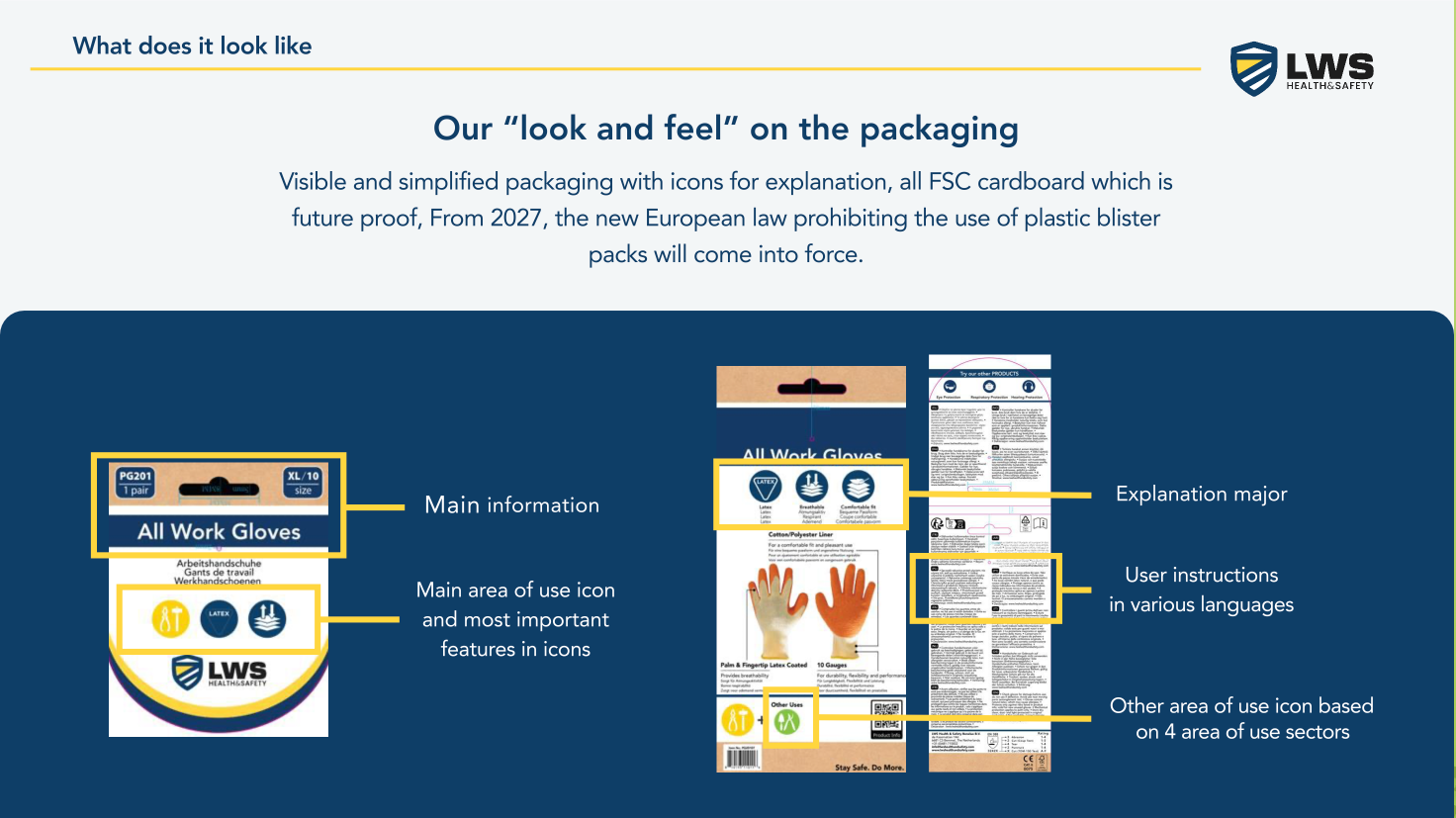
We view this as a practical move in line with where the European market is heading: reducing unnecessary plastic while prioritizing functional, retail-friendly designs that work for both buyers and end users.
Elevating Merchandising on the Shelf
Packaging choice directly impacts aisle performance. Cardboard-based packaging offers a richer canvas to communicate value directly at the point of sale:
- Clearer Product Messaging: Ample surface area allows us to display key safety features, application icons, and technical info without cramming text into tiny plastic inserts.
- Visual Hierarchy: High-quality printing enables clear color-coding across our core Areas of Use (Construction & Remodel, Painting & Renovation, Automotive & Mechanical, Gardening & Landscaping).
- Cleaner Aisle Aesthetics: Standardized cardboard designs eliminate glare from overhead store lighting, creating a cohesive visual line across the pegboard.
A Sensible Step Towards 2030
As PPWR details continue to evolve towards 2030 and beyond, no single packaging format offers an automatic, one-size-fits-all compliance guarantee. Responsible category management requires continuous evaluation and adaptation.
Our direction is straightforward: reduce unnecessary plastic, continually refine our material choices, and develop our core safety range with the future of European retail requirements in mind. Moving away from traditional plastic blister packaging isn't a final destination, it is a practical, sensible step toward a cleaner, better-navigated safety aisle.