
May 28, 2026
Designing a PPE Safety Center in DIY Stores

For a DIY store manager, the sales floor is a battleground of attention. Every aisle competes for the customer’s eyes, and every cluttered shelf represents lost time and messy operations. In our previous discussions, we explored how to shift your category From Chaos to Clarity, why a smaller, curated product range drives faster sales, and how this transformation unlocks higher profit margins.
But how does this look in real life on your store floor?
The answer lies in moving away from scattered rows of generic merchandise and adopting a dedicated "Store-within-a-Store" concept. Implementing a strategic PPE safety center design is the ultimate way to streamline store operations, reduce the burden on your floor staff, and turn a complex technical category into an effortless self-service destination.
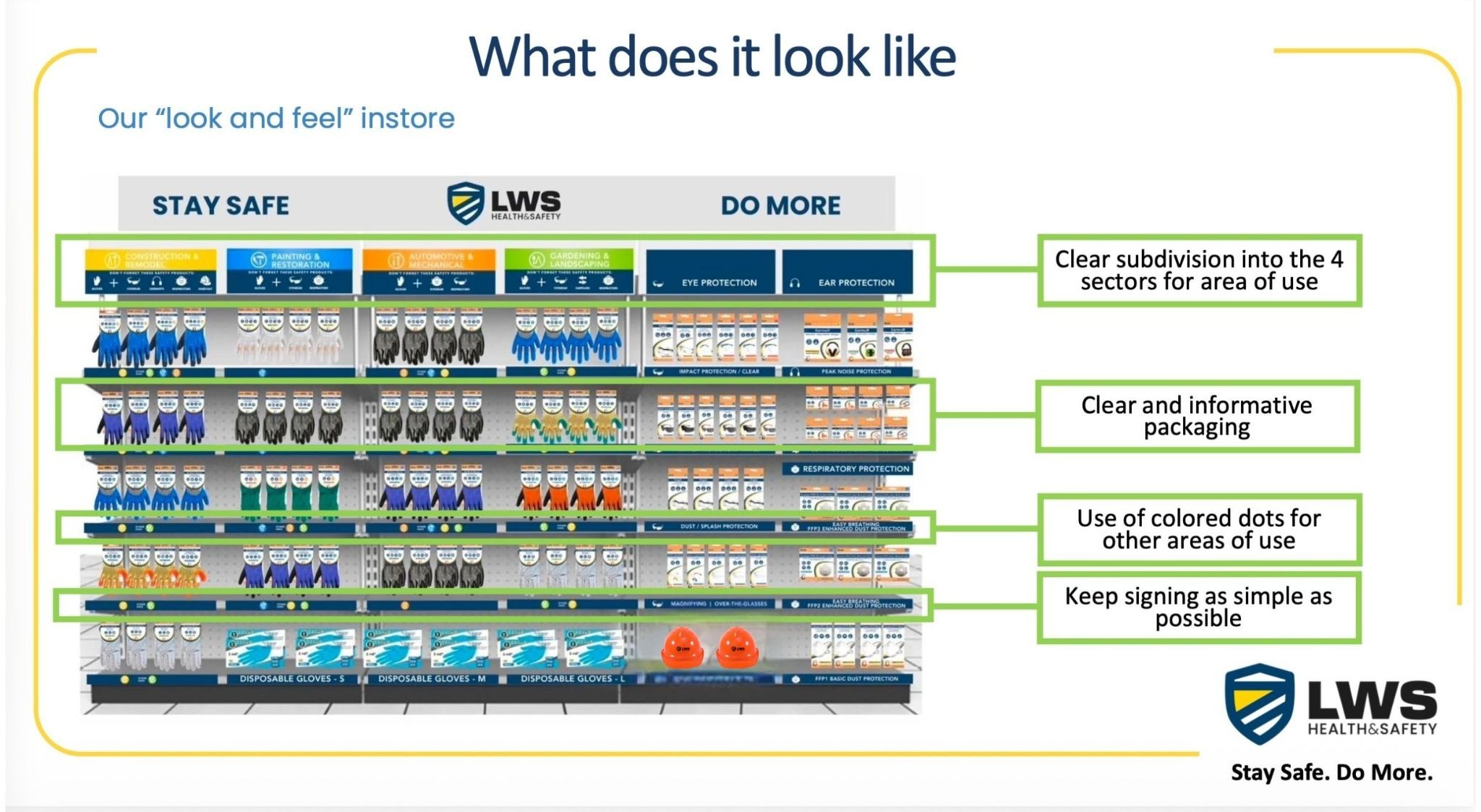
Here is how to design a high-performing safety center in your DIY store.
1. Position for High-Traffic Intent (The Destination Zone)
PPE should never be hidden in the back corners or treated as an impulse buy at the checkout counters. Safety gear is a planned purchase that accompanies major projects.
- The Layout Strategy: Place your PPE safety center near high-intent, heavy-project zones like Building Materials, Power Tools, or Machinery.
- The Operational Benefit: When a contractor picks up a sander, or a DIYer buys timber, the safety center stands directly in their path as a logical next step. It acts as a visual reminder, ensuring they grab their masks and gloves before heading to the registers, naturally increasing the store's average basket size.
2. Group by Application, Not Anatomy (Zoning)
As we established in our category structure blueprint, customers don't look for "all gloves"; they look for a solution to their specific task.
- The Layout Strategy: Divide the safety center into clear, color-coded task zones. Your PPE safety center design should group items by Area of Use—such as Automotive & Mechanical, Gardening & Landscaping, or Painting & Renovation.
- The Operational Benefit: Instead of running between different aisles to find matching eyewear and gloves, the customer finds a complete project-based package in one single grid. This layout keeps the shelves organized and makes restocking significantly easier for your team.
3. Deploy Staff-Free Navigation (The Silent Salesperson)
With high floor-staff turnover and busy peak hours, you cannot rely on team members to explain technical safety specifications or EN standards to every customer. The layout must do the selling for you.
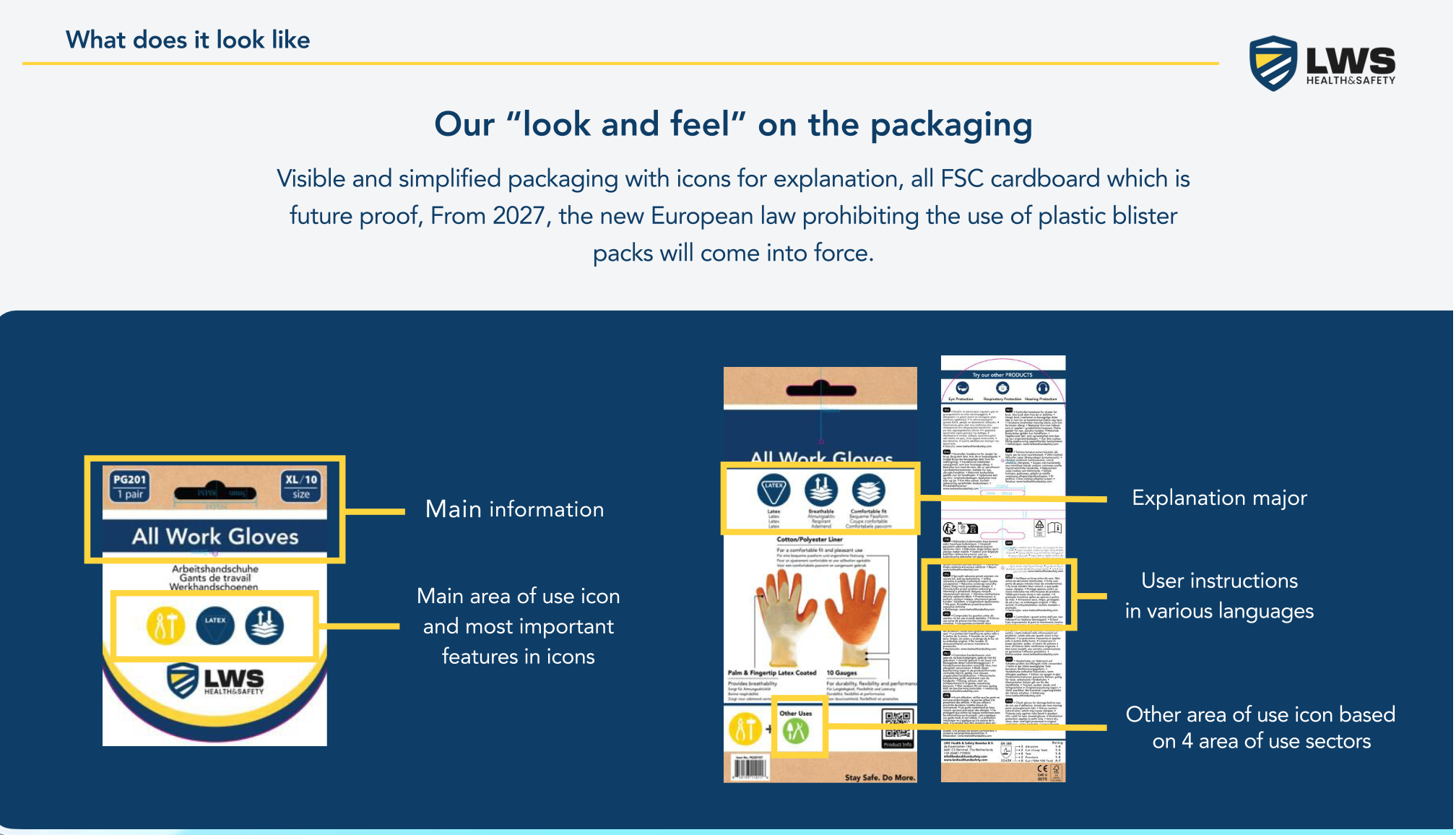
- The Layout Strategy: Use high-quality, professional POS headers and bold iconography at eye level. Incorporate clean visual cues that highlight advanced product features.
- The Operational Benefit: Clear signage creates a frictionless self-service environment. The shelf answers the customer’s questions instantly, allowing them to upgrade their selection to premium items entirely on their own, leaving your staff free to handle logistics and customer checkout.
The Bottom Line
A well-executed PPE safety center design changes the physics of your store. It stops being a cluttered aisle that requires constant tidying and becomes an organized, high-velocity destination. By making safety simple to understand and easy to navigate, you keep your shelves perfectly organized, your customers safe, and your store performance at an all-time high.
About LWS Health & Safety
LWS Health & Safety is a division of Lighthouse Worldwide Solutions, founded in 1982 and recognized globally as a leader in contamination monitoring and safety solutions.
At LWS Health & Safety, we design personal protective equipment (PPE) that’s easy to understand, easy to use, and made for real life. From DIY projects and gardening to renovation and automotive tasks, we help make safety a natural part of everyday work, so you and the users can focus on getting things done.