
April 23, 2026
The 4 Biggest Mistakes in PPE Category Management

In the DIY and professional retail landscape, the PPE aisle is often the most neglected corner. Retailers frequently apply generic merchandising rules to safety gear, but PPE is a "high-consequence" category. Managing it incorrectly doesn't just lose sales; it loses customer trust.
LWS Health & Safety, drawing on the 40+ years of engineering expertise from Lighthouse Worldwide Solutions, sees a massive potential to clean up the category. Success in this sector starts by avoiding these 4 critical mistakes:
1. The Price Trap: Treating PPE as a Commodity
While many retailers already stock premium brands, the mistake lies in managing PPE as a generic commodity. When safety gear is treated like any other hardware item, the conversation defaults to price rather than protection.
- The Pitfall: Competing only on price erodes margins and signals that safety is a bargain-basement item.
- The Shift: Focus on the value of the solution. Even with high-quality brands on the shelf, success comes from a category management strategy that highlights professional standards, ensuring that safety is never treated as a "bargain-basement" decision.

2. SKU Proliferation: The "More is Better" Myth
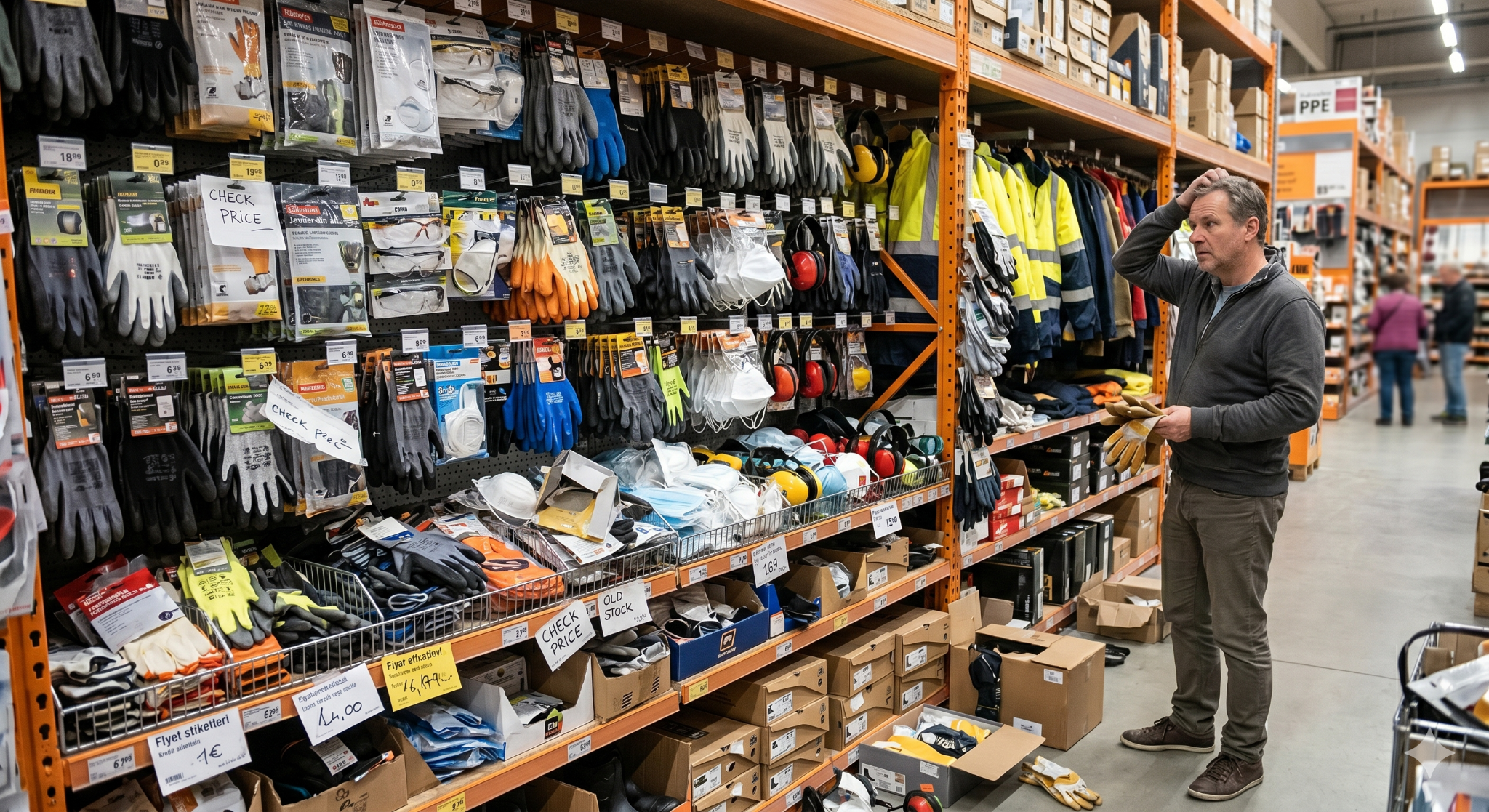
Many retailers believe that stocking dozens of similar general-purpose gloves increases sales. In reality, it creates "Analysis Paralysis."
- The Pitfall: Over-assortment leads to high stock investment and confused customers who walk away empty-handed because they can't distinguish between options.
- The Shift: Fewer choices = clearer decisions; fewer SKUs = less investment in stock. Simplifying assortments to include a task-optimized range—ensuring the customer has exactly the best product for the job at hand—is proven to reduce confusion and increase conversion rates.
3. Merchandising by Product Type (Instead of Use Area)
Grouping all gloves or all goggles together might seem logical to a retailer, but it doesn't match how a customer shops.
- The Pitfall: A customer shouldn't have to hunt through a generic wall to find protection for a specific task.
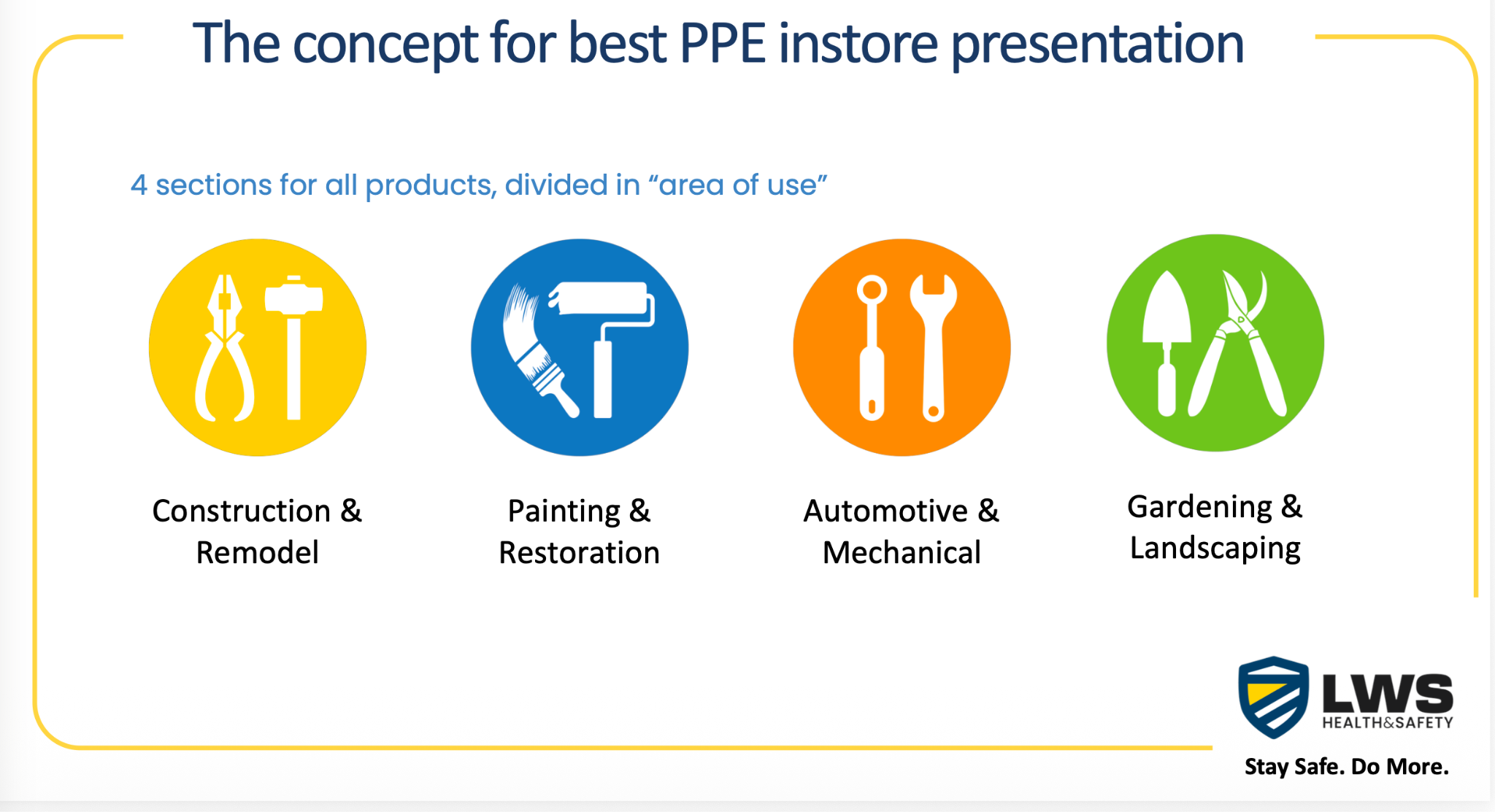
- The Shift: Organize by Use Areas, such as "Automotive & Mechanical" or "Gardening & Landscaping." Implementing smart planograms that group the right protection for the right task simplifies the user’s journey and drives immediate sales by providing a complete solution in one spot.
4. Overlooking the "Silent Salesperson" (Shelf Communication)
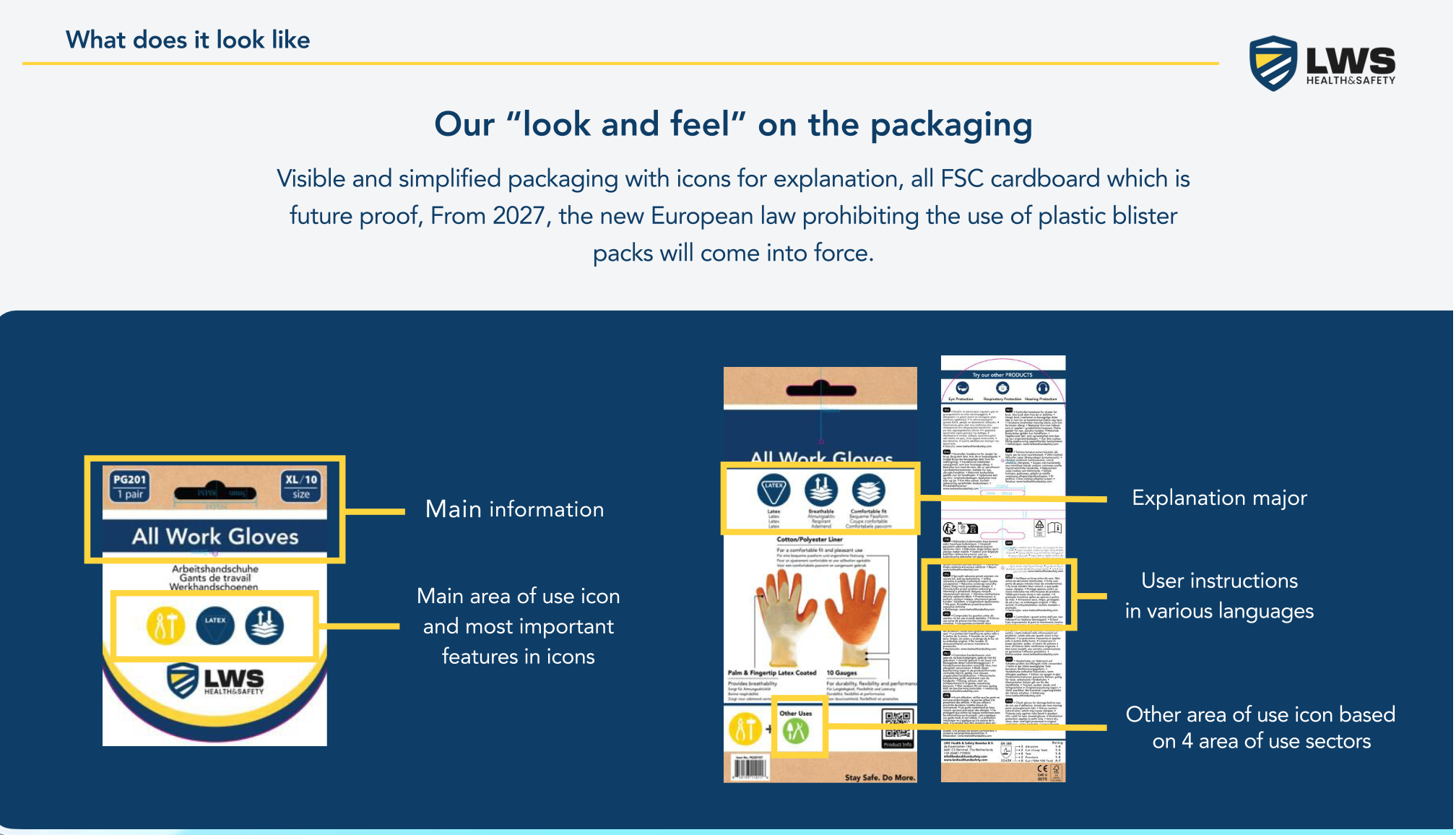
PPE is technical and often intimidating. If the shelf doesn't explain the "Why" and "How," you are forcing your store staff to be safety experts, a burden they often aren't trained to carry.
- The Pitfall: Relying on small print on packaging is a losing strategy that slows down the decision process.
- The Shift: High-quality POS materials and clear visual guidance are essential. Consistent, clean presentation across all retail locations ensures your "silent salesperson" is working 24/7 to guide the user from "What is this?" to "This is what I need" in under 5 seconds.
PPE retail doesn't have to be chaotic. It requires a partner committed to raising the retail standard. At LWS Health & Safety, we specialize in turning these "Shifts" into reality.
Why choose LWS Health & Safety as your PPE partner?
✓ We clean up the category with smart planograms and a unified brand.
✓ We simplify assortments, reducing your stock investment while increasing conversion.
✓ We provide premium, high-quality POS and consistent in-store presentations.
✓ We bring deep category expertise to ensure fast implementation and reliable execution.
Is your PPE aisle losing money or building trust? Let’s discuss how to set a new standard in your stores.